
Introduction
There is perhaps no food on earth more universally loved than the french fry. Across cultures, across cuisines, across generations — the humble fried potato has earned a place at tables everywhere, from the finest restaurants to the most casual street corners. And yet, for all its apparent simplicity, the perfect french fry is one of the most technically demanding things a home cook can attempt.
Most homemade fries disappoint. They emerge from the oil pale and soft, or golden on the outside but dense and starchy within, or crisp for thirty seconds before turning limp and greasy as they cool. The gap between a truly great fry — shattering crisp on the outside, light and fluffy on the inside, staying crisp long enough to actually enjoy — and the mediocre versions most people make at home is enormous. And for most home cooks, the reason for that gap has remained a mystery.
This recipe closes that gap entirely.
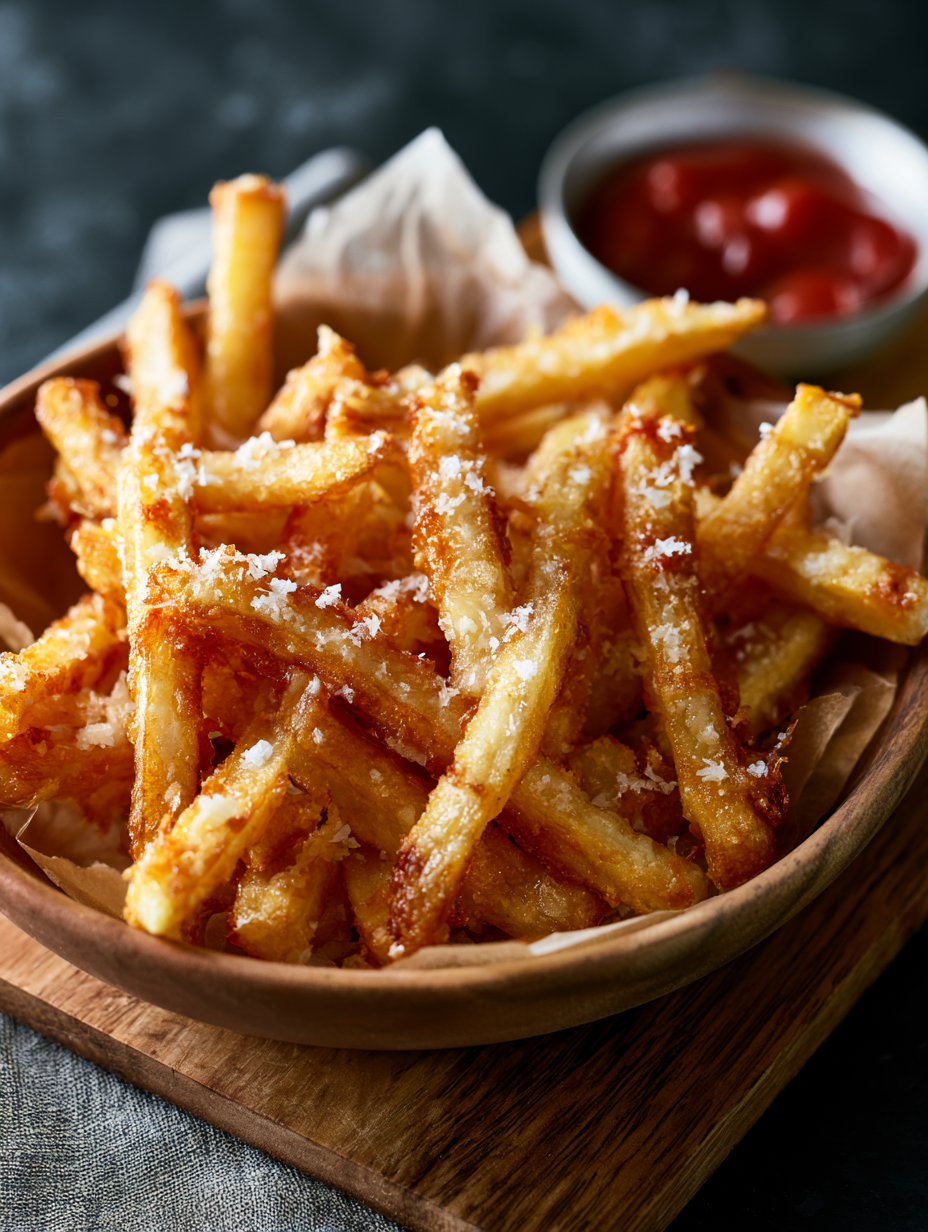
The Crispy Double-Fried Cheese French Fries method is not simply a recipe — it is a complete technique built on a precise understanding of what makes a french fry great. It combines four specific steps — a brief boil, a cornstarch coating, a freezer rest, and a double fry — each of which addresses a different aspect of the fry’s texture and flavour. The result is a french fry with a crust that genuinely shatters when you bite into it, an interior that is soft and yielding, and a flavour enhanced by a dusting of cheese powder and fresh coriander that makes the whole thing completely irresistible.
In this article, we will explore every stage of this method in full detail — the ingredients, the science, the techniques, and all the tips you need to make these fries absolutely perfect. By the end, you will understand not just how to make great fries, but why each step works, which will make you a better fry cook for the rest of your life.
Part One: The Science of the Perfect Fry
Before we begin cooking, it is worth spending a moment understanding the science behind what we are trying to achieve. This is not a distraction from the practical work — it is the foundation of it. When you understand why each step matters, you can make better decisions in the kitchen, adapt to whatever potatoes or equipment you have, and troubleshoot if something goes wrong.
A great french fry requires three things simultaneously: a dry, crisp exterior crust; a light, fluffy interior; and the ability to stay crisp rather than turning soggy as it cools. These three goals are actually in tension with each other, because they require contradictory conditions.
A light, fluffy interior requires that the potato is cooked through — soft and yielding all the way to the centre. But deep frying alone cannot achieve this without either burning the outside or leaving the inside undercooked. Hence the pre-boil: a brief three-minute boil partially cooks the potato, beginning the process of softening the interior before the fry ever touches the oil.
A dry, crisp exterior requires that the surface of the potato is as dry as possible and coated in something that will form a rigid crust when fried. Raw potato skin contains moisture and surface starch that, when fried, creates a soft, slightly gummy coating rather than a crisp one. The cornstarch coating addresses this directly: it absorbs surface moisture and, when fried, forms a thin, rigid, glass-like crust that is far crispier than anything raw potato skin can produce.
The freezer rest serves a dual purpose. It dries the cornstarch coating thoroughly — any residual moisture that might soften the crust is driven off or frozen solid — and it chills the interior of the potato back down after boiling. When a cold potato hits hot oil, the temperature differential causes the surface to crisp rapidly while the interior warms gently, creating the ideal contrast between crisp outside and soft inside.
And then there is the double fry — perhaps the most important technical step of all. The first fry at lower temperature cooks the interior through and sets the structure of the crust. The second fry at higher temperature rapidly dehydrates the crust, driving out any remaining moisture and creating the extraordinary shattering crispness that distinguishes a truly great fry from a merely good one.
Together, these four techniques — boil, coat, freeze, double fry — work in concert to produce a result that none of them could achieve alone.
Part Two: Ingredients
To make a generous portion of fries for two to three people, you will need:
For the Fries:
- 700 g of potatoes (approximately three medium-to-large potatoes)
- A quarter teaspoon of salt for boiling
- 3 tablespoons of cornstarch (corn flour)
- Cooking oil, sufficient for deep frying
For the Seasoning:
- 1 tablespoon of cheese powder
- 1 tablespoon of dried or finely chopped coriander (or parsley, if you prefer)
Part Three: Choosing the Right Potato
Not all potatoes are created equal when it comes to frying, and the choice of variety makes a genuine difference to the final result.
The ideal frying potato is high in starch and low in moisture. High-starch potatoes — varieties such as Maris Piper, King Edward, Russet, or Idaho — have a dry, floury interior that becomes wonderfully light and fluffy when cooked. Their low moisture content also means less steam inside the fry during cooking, which helps the interior stay light rather than becoming dense and gluey.
Waxy potatoes — varieties like Charlotte, Jersey Royal, or new potatoes — have a higher moisture content and lower starch level. They hold their shape well in boiling water but produce a denser, heavier fry that does not achieve the same light interior texture.
If you are unsure which type of potato you have, a simple test can tell you: dissolve two tablespoons of salt in a cup of water and drop a raw potato in. A high-starch potato will sink; a waxy potato will float.
For this recipe, choose the starchiest, floury-est potato you can find. The difference in the final result is significant.
Part Four: Preparing and Boiling the Potatoes
Step 1: Cutting the Fries
Peel the potatoes and cut them into even french fry sticks. Consistency of size is important here — if some fries are much thicker than others, the thinner ones will cook more quickly and may overcook or burn during the double fry while the thicker ones are still catching up.
A thickness of approximately one centimetre square is a good general standard — thick enough to have a substantial, fluffy interior but not so thick that the outside overcooks before the inside is soft. Cut all your fries to as similar a size as possible.
Step 2: The Boil
Place the cut potato sticks into a pot of cold water, add a quarter teaspoon of salt, and bring to a boil. Once boiling, cook the potatoes for exactly three minutes. Not five minutes, not ten — three minutes.
This brief boil is precisely calibrated. Three minutes is enough to begin softening the interior of the potato and to slightly cook the surface starch, which will help the cornstarch coating adhere more evenly in the next step. It is not long enough to cook the potato through, which would make it too fragile to handle and coat. The potato should still be firm — raw in the very centre — when it comes out of the boiling water.
The salt in the boiling water does more than season the potato. Salt raises the temperature at which the potato’s cell walls break down, helping the fry hold its shape during boiling and frying rather than becoming mushy.
Step 3: The Ice Water Bath
Immediately after draining the boiled potatoes, transfer them into a bowl of cold water — ideally ice water. This stops the cooking process instantly. Without this step, the residual heat in the hot potato continues to cook the interior even after it leaves the boiling water, potentially making the potato too soft to handle and coat successfully.
Allow the potatoes to sit in the cold water for two to three minutes, until they are fully cooled. Then drain them thoroughly.
Part Five: Coating and Chilling
Step 1: The Cornstarch Coating
Place the drained potato sticks into a wire basket, a colander, or a dry bowl. Sprinkle three tablespoons of cornstarch evenly over the potatoes. Now toss and shake vigorously — the goal is to coat every surface of every fry with a thin, even layer of cornstarch.
The coating does not need to be thick. A light, even dusting is far better than clumps of starch on some fries and bare patches on others. If some fries are sticking together, separate them and toss again. The finished fries should each be individually coated, dry, and separate.
Cornstarch is preferred over plain flour for this application because its finer grain creates a smoother, thinner coating, and because it produces a crispier, more glass-like crust when fried. Flour coatings can be slightly heavier and more doughy; cornstarch coatings shatter.
Step 2: The 12-Hour Rest
This is the step that requires the most patience — and it is the step that home cooks most often want to skip, and most often regret skipping.
Place the coated potato sticks in the refrigerator or freezer for twelve hours. In the refrigerator, the cold temperature dries the cornstarch coating slowly and allows any surface moisture to evaporate. In the freezer, the process is faster and more complete — the moisture is locked in ice and the coating becomes completely dry and rigid.
Twelve hours is the recommended minimum. If you can leave them for longer — up to twenty-four hours — the result will only be better. Many great fry recipes require an overnight rest for exactly this reason.
If you are genuinely pressed for time, a minimum of four hours in the freezer will produce acceptable results, but twelve hours will produce noticeably superior ones. Plan ahead, make the fries the night before, and the actual cooking the next day takes only fifteen minutes.
Part Six: The Double Fry
The double fry is the heart of this technique. It is what separates these fries from every ordinary homemade version.
Equipment
Use a deep, heavy-bottomed pan — a wok, a Dutch oven, or a deep saucepan. Fill it with enough cooking oil to fully submerge the fries. A thermometer is very helpful here, though not strictly essential; you can gauge the temperature of oil by the way it behaves around the end of a wooden chopstick or skewer — gentle bubbling indicates around 160 to 170°C, vigorous bubbling around 180 to 190°C.
The First Fry
Heat the oil to approximately 160 to 170°C — a moderate frying temperature. Lower the chilled, coated fries carefully into the hot oil in batches. Do not crowd the pan — too many fries at once will drop the oil temperature dramatically, resulting in oily, soft fries rather than crisp ones. Fry in two or three batches if necessary.
Cook the fries for six minutes at this moderate temperature. During this first fry, the goal is not colour or crispness — it is to cook the interior of the potato fully through while setting the structure of the cornstarch coating. The fries will be pale gold and only lightly coloured when they come out. This is correct and expected.
Remove the fries from the oil using a strainer or spider and allow them to drain on a rack or paper towels. Allow them to rest for at least five minutes. This rest period allows the surface moisture produced during the first fry to escape as steam, further drying the coating before the second fry.
The Second Fry
Increase the oil temperature to approximately 180 to 190°C — a higher, more aggressive frying temperature. Return the rested fries to the hot oil in batches and fry for three minutes. This second fry is the transformation: the high heat rapidly drives out any remaining moisture in the coating, causing it to blister and harden into the extraordinary crisp crust that makes these fries so distinctive.
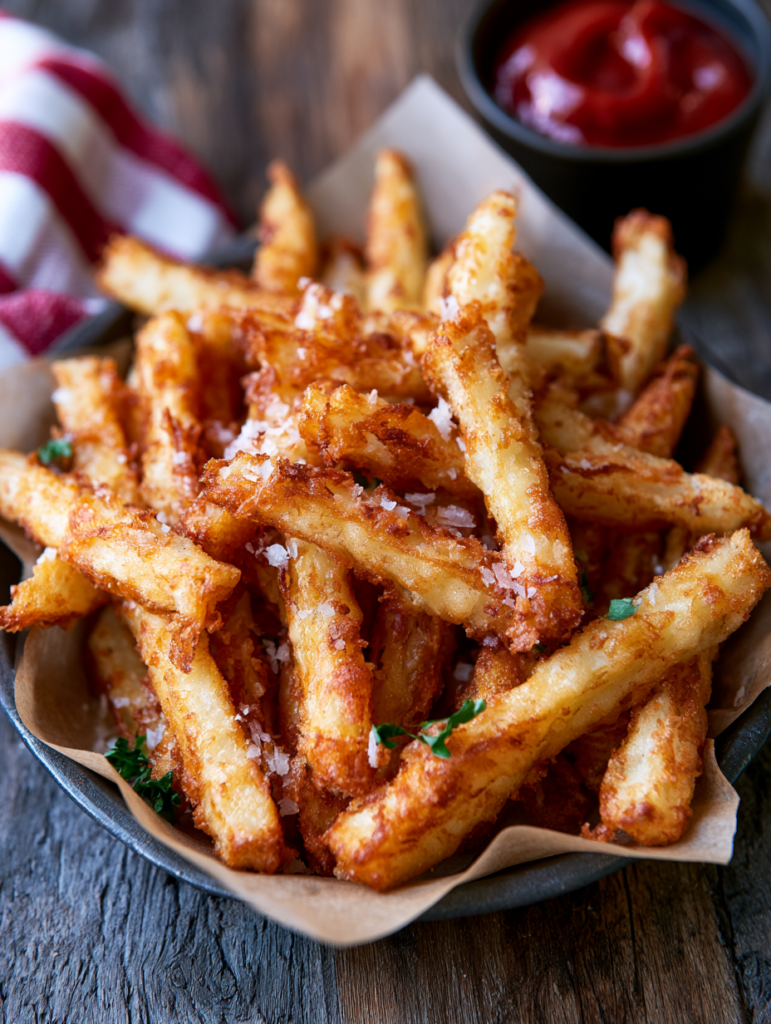
Watch the fries closely during the second fry. After three minutes, they should be a deep, even golden brown with a visibly blistered, rough texture on the surface — that rough texture is exactly what you are looking for. It indicates a crust that will shatter rather than bend when you bite it.
Remove from the oil, drain briefly on paper towels, and move immediately to seasoning.
Part Seven: Seasoning and Serving
The seasoning for these fries is simple but perfectly chosen. Transfer the hot, double-fried fries into a large mixing bowl. Sprinkle one tablespoon of cheese powder and one tablespoon of dried or finely chopped coriander (or parsley) over the fries. Toss the bowl gently but thoroughly until every fry is evenly coated in the seasoning.
The cheese powder adds a savoury, umami-rich, slightly tangy coating that clings to the crisp surface of each fry and amplifies the potato flavour dramatically. It is the seasoning equivalent of a perfect finishing touch — not overwhelming, but deeply satisfying.
The coriander (or parsley) adds a bright, fresh, herby counterpoint to the richness of the fried potato and cheese. Its fine texture means it adheres well to the fries and provides a subtle aromatic note in every bite.
Serve immediately, while the fries are at their absolute crispiest and hottest. Like all fried food, these fries are at their peak in the first few minutes after coming out of the oil. Do not let them sit.
Part Eight: Tips for Perfect Results
Choose the right potato. A high-starch, floury variety is essential for a light, fluffy interior. Waxy potatoes will produce a denser, heavier fry.
Cut evenly. Inconsistent sizing leads to inconsistent cooking. Take a few extra minutes to cut all fries to the same dimensions.
Do not skip the ice bath. Stopping the cooking process immediately after boiling is essential for maintaining the right texture in the potato before coating.
Coat evenly. Clumps of cornstarch will create thick, uneven patches of coating. Toss thoroughly until every fry is lightly and evenly dusted.
Respect the 12-hour rest. This is the step that most dramatically separates good fries from exceptional ones. The patience required is minimal — the improvement is significant.
Fry in batches. Overcrowding the oil drops the temperature and produces soft, greasy fries. Give each batch room to move freely in the oil.
Rest between fries. The five-minute rest between the first and second fry allows steam to escape and the coating to dry further. Do not skip this rest.
Season immediately. Cheese powder and herbs adhere best to fries that are hot and freshly drained. Season the moment they come out of the second fry, while the surface is still hot and slightly tacky.
Part Nine: Variations
Different seasonings. These fries take well to almost any dry seasoning. Smoked paprika, garlic powder, onion powder, cayenne pepper, or a commercial seasoning blend all work beautifully. The cornstarch coating provides an excellent surface for any dry seasoning to adhere to.
Truffle oil finish. A light drizzle of truffle oil over the finished fries, just before serving, turns this simple dish into something remarkably elegant.
Dipping sauces. These fries pair perfectly with a wide range of dipping sauces: garlic aioli, sriracha mayo, classic ketchup, cheese sauce, or a tangy yoghurt dip with fresh herbs.
Sweet potato variation. The same technique — boil, coat, freeze, double fry — works with sweet potatoes. The result is a fry with a crisp exterior and a sweet, slightly caramelised interior, finished beautifully with cinnamon sugar or a spicy seasoning blend.
Conclusion
The Crispy Double-Fried Cheese French Fries recipe is more than a recipe — it is a lesson in the power of technique. Every step has a purpose. The boil softens the interior. The cornstarch creates the crust. The freeze dries the coating. The double fry achieves the crispness. Remove any one of these steps and the result is diminished. Keep them all, execute each one with care, and the result is a french fry that genuinely rivals the best versions you have ever eaten anywhere.
This is the kind of cooking that rewards patience and attention. The preparation begins the night before, but the actual cooking takes fifteen minutes. And those fifteen minutes produce something that will genuinely surprise and delight everyone who tastes it.
Make these fries once, and you will never be satisfied with ordinary homemade fries again.
Enjoy every crispy, cheesy, golden bite!
Print
Crispy Double-Fried Cheese French Fries: The Science and Art of the Perfect Homemade Fry
Ingredients
700g potatoes (about 3 medium-to-large), 3 tbsp cornstarch, cooking oil for deep frying, 1 tbsp cheese powder, 1 tbsp dried or chopped coriander (or parsley), and a quarter tsp salt for boiling.
Instructions
Peel the potatoes and cut them into even fry-sized sticks. Place them in a pot of water with the salt and boil for exactly 3 minutes. Drain immediately and transfer to a bowl of cold or ice water to stop the cooking. Once cooled, drain them well.
Place the drained potato sticks in a bowl or wire basket, sprinkle the cornstarch over them, and toss well until every piece is evenly and lightly coated. Put the coated fries in the refrigerator or freezer for 12 hours.
When ready to fry, heat a generous amount of oil in a deep pan. For the first fry, cook the fries for 6 minutes at a moderate temperature until pale gold. Remove, drain, and let them rest for at least 5 minutes. Then increase the oil temperature and fry them a second time for 3 minutes until deep golden and crispy. Remove and drain on paper towels.
While still hot, transfer the fries to a large bowl, sprinkle the cheese powder and coriander over them, and toss until evenly coated. Serve immediately.
Notes
The secret to truly crispy fries lies in four things working together: the brief boil softens the inside, the cornstarch creates the crust, the long rest in the freezer dries the coating completely, and the double fry drives out all remaining moisture to produce that signature shattering crunch. Do not rush the 12-hour rest — it is the step that makes the biggest difference.