
Introduction
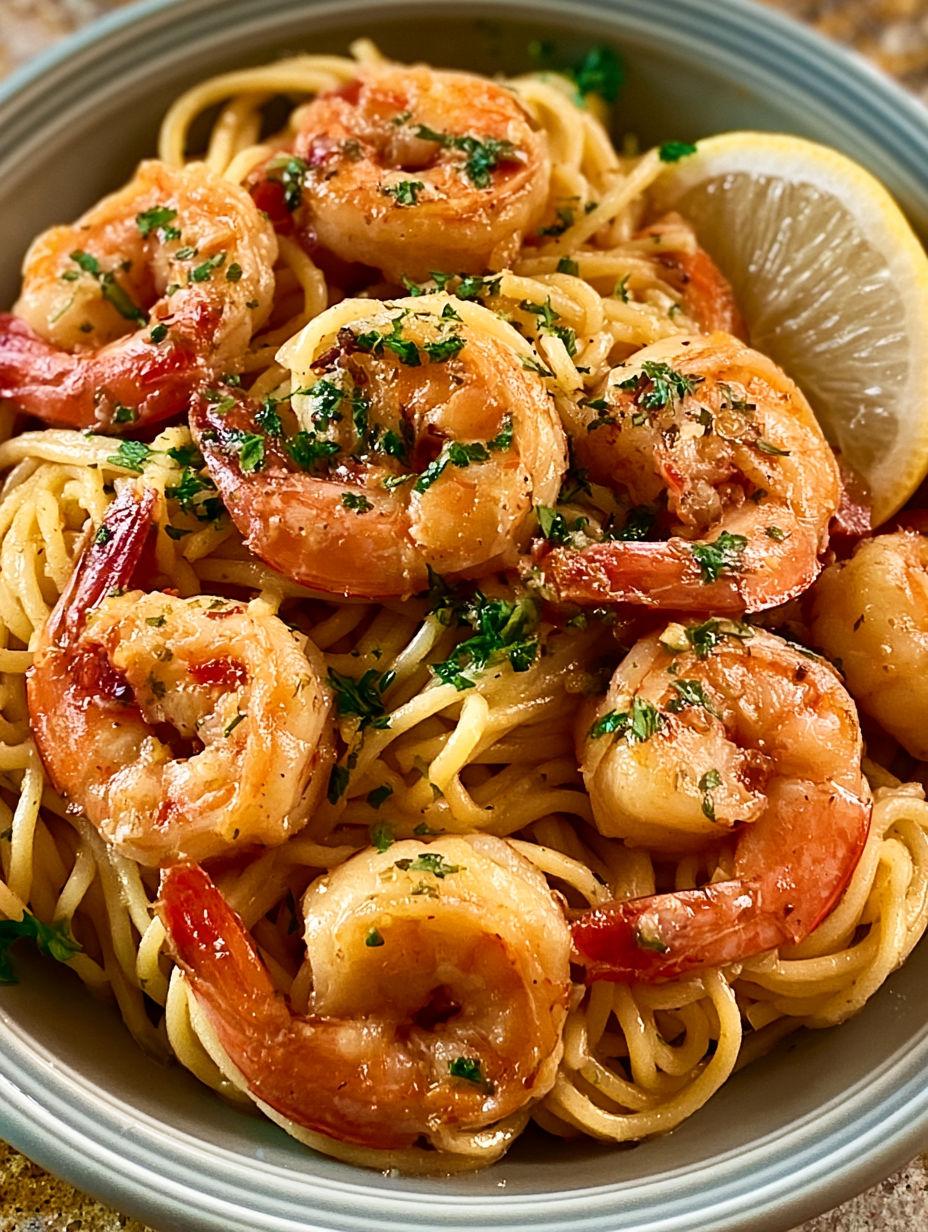
There are certain dishes that have earned their place in the permanent repertoire of home cooks everywhere — not because they are complicated or showy, but because they are simply, reliably, deeply delicious. Garlic Butter Shrimp Pasta is one of those dishes.
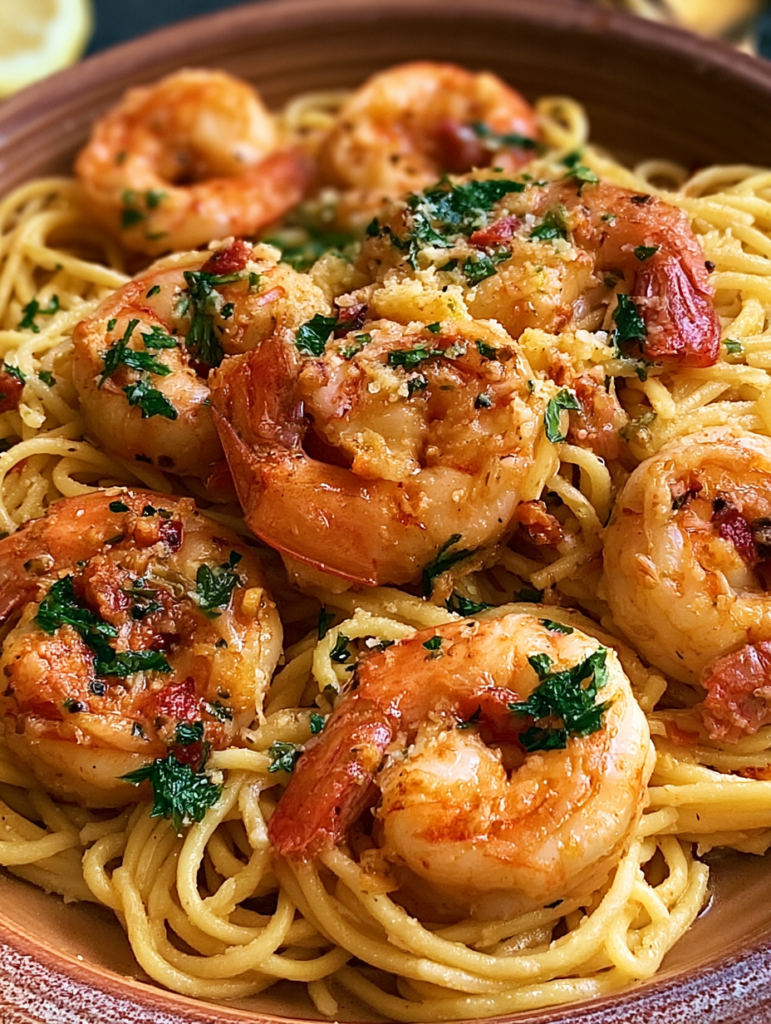
It is the kind of recipe that feels like a treat every single time you make it, yet requires no special skills, no hard-to-find ingredients, and less than thirty minutes from start to finish. A handful of plump, paprika-marinated shrimp. Six cloves of golden, fragrant garlic. Sweet cherry tomatoes softened in butter and white wine. A generous pour of heavy cream, thickened into a silky sauce. Pasta tossed through all of it, bound together with a splash of starchy pasta water and finished with grated Parmesan and fresh parsley.
The result is a bowl of pasta that is simultaneously elegant and comforting — the kind of thing you might order in a good Italian restaurant and then spend days trying to recreate at home. With this recipe, you do not need to try to recreate it. You can simply make it.
This article will walk you through every element of this dish in detail: the marinated shrimp, the creamy tomato garlic sauce, the pasta, and the technique of bringing everything together into a cohesive, deeply flavourful whole. Along the way, you will find the explanations, tips, and insights that will help you make this dish with total confidence — and make it beautifully, every single time.
Part One: Why This Recipe Works
Before stepping into the kitchen, it is worth understanding what makes this particular combination of ingredients so successful.
The dish is built on layers of flavour that accumulate and deepen at every stage of cooking. It begins with the shrimp marinade — just salt, paprika, and black pepper, but applied before cooking so the seasoning penetrates the flesh rather than sitting only on the surface. Five minutes is all it takes, but those five minutes make the shrimp noticeably more flavourful throughout.
Then there is the garlic. Six cloves, sliced thin and cooked slowly in oil until golden and fragrant — not burnt, not raw, but that perfect golden state where the sharpness of raw garlic has softened into something sweeter, nuttier, and more complex. The shrimp are cooked in this garlic oil, absorbing its flavour as they turn pink and lightly golden. Then, crucially, the shrimp are removed from the pan and the garlic-infused oil is left behind to become the foundation of the sauce.
The cherry tomatoes are cooked in that same garlic oil, softening and releasing their juices and natural sugars into the pan. White wine is added next — a brief deglaze that lifts all the caramelised flavour from the base of the pan and adds acidity and depth to the sauce. Butter follows, enriching the sauce and adding a silky body. Then the heavy cream, transforming the whole mixture into a sauce that is rich, fragrant, and deeply satisfying.
The final touch — adding reserved pasta water to the sauce — is one of the most important techniques in Italian-style pasta cooking. Pasta water is not plain water. It is starchy water, loaded with the starch released by the pasta during boiling. When added to a cream sauce, it helps the sauce cling to the pasta strands, emulsifies the fat and liquid together, and creates a cohesion between sauce and pasta that makes every forkful taste complete.
This is a dish built on good technique and thoughtful layering. Once you understand why each step matters, making it becomes intuitive.
Part Two: Ingredients
To make two generous portions, you will need:
For the Shrimp:
- 200 g of shrimp, peeled and deveined
- One eighth of a teaspoon of salt
- A quarter teaspoon of paprika
- Black pepper to taste
For the Pasta:
- 200 g of pasta (spaghetti or linguine work beautifully here)
- Half a teaspoon of salt for the boiling water
- 3 tablespoons of pasta water, reserved before draining
For the Sauce:
- Cooking oil or olive oil
- 6 garlic cloves, thinly sliced
- 15 cherry tomatoes, halved
- 2 tablespoons of white wine
- 1 tablespoon of butter
- 150 ml of heavy cream
- One eighth of a teaspoon of salt (optional, to taste)
- Generous amounts of freshly grated Parmesan cheese
- Fresh parsley, finely chopped
- Freshly ground black pepper for finishing
Part Three: A Closer Look at the Key Ingredients
Understanding your ingredients makes you a more confident and more instinctive cook. Here is why each component in this recipe matters.
Shrimp: The protein centrepiece of the dish. Choose shrimp that are already peeled and deveined for convenience, or buy shell-on shrimp and prepare them yourself — the shells can be briefly fried in oil to add additional flavour to the sauce base before being discarded. Medium to large shrimp work best: they have enough substance to hold their own against the bold flavours of the sauce, and they provide a satisfying, meaty bite.
Paprika: Added to the shrimp marinade, paprika brings a warm, slightly smoky sweetness that complements both the natural sweetness of the shrimp and the tomatoes in the sauce. It also gives the shrimp a beautiful reddish colour as they cook.
Garlic: The backbone of this recipe. Six cloves is a generous amount, and it should be. Garlic is the dominant flavour note that runs through the entire dish — in the oil that cooks the shrimp, in the sauce, and as golden, tender slices distributed throughout the finished pasta. Use fresh garlic cloves; pre-minced garlic from a jar lacks the brightness and complexity of fresh.
Cherry tomatoes: Halved and cooked in the garlic oil, cherry tomatoes provide sweetness, acidity, and a burst of colour. As they cook, they soften and release their juices into the pan, contributing a fresh, light tomato flavour to the sauce without making it heavy or overwhelming. Cherry tomatoes are preferable to regular tomatoes here because their flavour is more concentrated and their natural sweetness is higher.
White wine: Two tablespoons, added after the tomatoes have softened. White wine deglazes the pan — it lifts all the flavourful caramelised bits stuck to the base and incorporates them into the sauce. It also adds acidity and a subtle fruity complexity that lifts the entire sauce. Use a dry white wine that you would be happy to drink. Avoid cooking wines with added salt, which can make the sauce too salty and one-dimensional.
Butter: One tablespoon, added after the wine. Butter enriches the sauce, adds a silky smoothness, and bridges the gap between the acidic tomatoes and wine and the rich cream that follows. It also adds that characteristic slightly nutty, indulgent quality that makes butter-based sauces so universally appealing.
Heavy cream: 150 ml transforms the pan contents into a proper cream sauce — thick, rich, and coating. The cream is not just added for richness; it emulsifies with the butter, wine, and tomato juices to create a stable, unified sauce that clings to the pasta. Use heavy cream (double cream) rather than single cream or half-and-half, which can split or become watery when heated.
Pasta water: Perhaps the most underrated ingredient in pasta cooking. Pasta water contains dissolved starch from the boiling pasta, and this starch acts as a natural emulsifier and thickener. Adding three tablespoons to the cream sauce helps it cling to the pasta strands, prevents the sauce from becoming too thick as it cools, and creates the silky, cohesive texture that distinguishes a great pasta dish from a merely adequate one. Always reserve pasta water before draining — it is free, it takes two seconds, and it makes a significant difference.
Parmesan: Added at the end, directly into the sauce and pasta, Parmesan does several things at once. It seasons the dish (Parmesan is intensely salty), it adds depth and umami, and it thickens the sauce slightly as its proteins and fats melt into the cream. Use freshly grated Parmesan rather than the pre-grated powder in a canister — the flavour difference is dramatic, and freshly grated Parmesan melts much more smoothly into the sauce.
Part Four: Marinating the Shrimp and Cooking the Pasta
These two steps can be done simultaneously, which saves time and keeps the recipe moving efficiently.
Marinating the Shrimp
Place the peeled and deveined shrimp in a bowl. Add one eighth of a teaspoon of salt, a quarter teaspoon of paprika, and a generous grind of black pepper. Mix well until every shrimp is evenly coated in the seasoning. Set aside for five minutes.
Five minutes is enough for the seasoning to penetrate the surface of the shrimp. Do not marinate for significantly longer — shrimp are delicate, and the salt in the marinade will begin to draw out moisture from the flesh if left too long, potentially making the cooked shrimp slightly rubbery.
Boiling the Pasta
Bring a large pot of water to a rolling boil. Add half a teaspoon of salt — well-salted pasta water is one of the fundamentals of good pasta cooking. The water should taste pleasantly salty, almost like mild seawater. This salt seasons the pasta from the inside as it cooks, making a significant difference to the flavour of the finished dish.
Add the pasta and cook according to the package instructions until it reaches your preferred texture. If you enjoy your pasta with a little bite — al dente — cook it for one to two minutes less than the package suggests. The pasta will continue to cook briefly when added to the hot sauce, so leaving it slightly underdone at this stage ensures it reaches the perfect texture in the final dish.
Before draining, use a ladle or a cup to scoop out at least three tablespoons of the pasta water and set it aside. Then drain the pasta and set aside.
Part Five: Cooking the Shrimp
Heat a generous splash of oil in a wide frying pan or skillet over medium heat. Add the six sliced garlic cloves and cook, stirring frequently, until they become fragrant and turn a light golden colour. Watch the garlic carefully — sliced garlic can go from perfectly golden to burnt in under a minute. The goal is deep fragrance and a pale gold colour, not brown or dark.
Add the marinated shrimp to the pan in a single layer. Cook for approximately two minutes on the first side without moving them — letting them develop a light golden crust on the surface before flipping. Then turn each shrimp and cook for a further one to two minutes on the second side until they are pink all the way through and lightly golden.
Do not overcook the shrimp. Overcooked shrimp are rubbery, tough, and flavourless — one of the most common and most disappointing mistakes in seafood cooking. Shrimp cook extremely quickly. The moment they have turned fully pink with a slight golden colour and curled into a loose C-shape, they are done. Remove them from the pan immediately.
Transfer the cooked shrimp to a plate and set aside. Leave all the garlic and infused oil in the pan — this is the flavour foundation of the sauce.
Part Six: Building the Creamy Tomato Sauce
With the shrimp removed and the pan still hot over medium heat, add the halved cherry tomatoes. Cook, stirring occasionally, until the tomatoes soften and begin to collapse, releasing their juices into the pan. This usually takes three to four minutes. Some tomatoes will break down almost completely; others will retain their shape but become tender and jammy. Both textures are welcome in the finished sauce.
Pour in the two tablespoons of white wine. As the wine hits the hot pan, it will sizzle and steam — use a wooden spoon to scrape up any caramelised bits from the base of the pan and incorporate them into the sauce. Allow the wine to cook for about a minute, until most of the alcohol has evaporated and the sharp raw alcohol smell has mellowed into something more rounded and fruity.
Add the tablespoon of butter. Stir as it melts, incorporating it fully into the tomato and wine mixture. The sauce will become noticeably silkier as the butter emulsifies into the liquid.
Pour in the 150 ml of heavy cream. Add the optional pinch of salt. Stir to combine everything, then reduce the heat to low and allow the sauce to warm gently until it begins to bubble very softly around the edges. Do not bring it to a vigorous boil — cream sauces can split or reduce too quickly over high heat. A gentle, slow bubble is what you are looking for.
Part Seven: Bringing Everything Together
Add the drained pasta to the bubbling sauce, followed by the three tablespoons of reserved pasta water. Toss the pasta through the sauce, turning and lifting with tongs or two forks to coat every strand evenly. The pasta water will help the sauce loosen slightly and adhere more completely to the pasta.
Grate a generous amount of Parmesan directly over the pasta and stir it in. The Parmesan will melt into the sauce as you stir, thickening it slightly and adding its characteristic sharp, savoury depth. Add as much as you like — there is no such thing as too much Parmesan in a dish like this.
Return the cooked shrimp to the pan, nestling them into the pasta. Add the chopped fresh parsley. Toss everything together gently over low heat for one minute, until the shrimp are warmed through and evenly distributed throughout the pasta. Add a generous grind of freshly ground black pepper.
Taste the dish at this point and adjust the seasoning if necessary. A little extra salt, a little more Parmesan, a squeeze of lemon juice if you want a brighter finish — these final adjustments make the difference between a dish that is good and one that is perfectly tuned.
Part Eight: Plating and Serving
Use tongs to twist and coil the pasta into warmed bowls, then arrange the shrimp on top. Spoon any remaining sauce from the pan over the plated pasta. Finish with a final grating of Parmesan, a scattering of fresh parsley, and a generous grind of black pepper.
Serve immediately. Pasta waits for no one — it will continue to absorb the sauce and become drier as it sits, so the moment it is plated is the moment it is at its best.
Part Nine: Tips for the Best Results
Marinate the shrimp, even briefly. Five minutes makes a genuine difference to the depth of flavour in the finished shrimp. Do not skip this step even when you are in a hurry.
Do not burn the garlic. Golden garlic is sweet, fragrant, and beautiful. Burnt garlic is bitter and will taint the entire dish. Keep the heat at medium and watch it closely.
Remove the shrimp from the pan the moment they are cooked. Overcooked shrimp are the most common mistake in this recipe. As soon as they are pink and slightly curled, they are done — remove them and set them aside.
Always reserve pasta water. It takes two seconds and makes a significant difference to the texture of the finished sauce. Make it a habit with every pasta you cook.
Use freshly grated Parmesan. The flavour and melting quality of freshly grated Parmesan is incomparably better than pre-grated. Buy a piece and grate it yourself — it takes thirty seconds and is worth every one of them.
Taste and adjust at the end. Every batch of shrimp, every brand of cream, every variety of Parmesan is slightly different. Taste the finished dish and adjust — a little more salt, more pepper, more cheese, or a tiny squeeze of lemon can take it from very good to perfect.
Conclusion
Garlic Butter Shrimp Pasta is the kind of recipe that makes people fall in love with cooking. It is fast, it is forgiving, and it produces results that feel genuinely special — a bowl of silky, fragrant, cream-coated pasta studded with golden shrimp and bursting with the flavour of garlic, tomato, wine, and Parmesan.
It is a dish that rewards the attention you give it. Each step — the marinade, the careful cooking of the garlic, the gradual building of the sauce, the pasta water trick, the final toss with Parmesan — contributes something to the finished result. Together, they produce a pasta dish that is balanced, deeply flavourful, and completely satisfying.
Make it on a weeknight when you want something that feels like a treat. Make it on a weekend when you have a little more time to savour the process. Make it for someone you want to impress, or for yourself on a quiet evening when you simply deserve something delicious.
Either way — enjoy every single bite.
Print
Garlic Butter Shrimp Pasta: The Classic Comfort Dish That Never Fails
Ingredients
200g pasta, 200g shrimp (peeled and deveined), 150ml heavy cream, 15 cherry tomatoes (halved), 6 garlic cloves (sliced), Parmesan cheese (for grating), fresh parsley (chopped), 2 tbsp white wine, 1 tbsp butter, cooking oil, 3 tbsp reserved pasta water, ¼ tsp paprika, ⅛ tsp salt for the shrimp, ½ tsp salt for the pasta water, ⅛ tsp salt for the sauce (optional), and black pepper to taste.
Instructions
Mix the shrimp with the salt, paprika, and black pepper and let them marinate for 5 minutes. At the same time, cook the pasta in salted boiling water until done, making sure to save 3 tablespoons of the pasta water before draining.
Heat some oil in a pan over medium heat, add the sliced garlic and cook until golden and fragrant. Add the shrimp and cook until pink and lightly golden, then remove them from the pan and set aside, leaving the garlic and oil behind.
Add the cherry tomatoes to the same pan and cook until they soften. Pour in the white wine and let it cook for a minute, then add the butter and let it melt. Pour in the heavy cream, add the optional salt, and let the sauce simmer gently over low heat until it bubbles softly.
Add the drained pasta and the reserved pasta water to the sauce and toss well. Grate in a generous amount of Parmesan and stir until melted into the sauce. Return the shrimp to the pan, add the fresh parsley, and toss everything together over low heat. Finish with a generous grind of black pepper.
Plate the pasta, spoon the remaining sauce over the top, and garnish with more Parmesan and black pepper. Serve immediately
Notes
The reserved pasta water is the secret to a silky, well-coated sauce — never skip it. And keep a close eye on the shrimp: the moment they turn pink and curl into a loose C-shape, they are done. Even thirty seconds too long will make them rubbery, so remove them from the pan without hesitation and return them only at the very end to warm through.